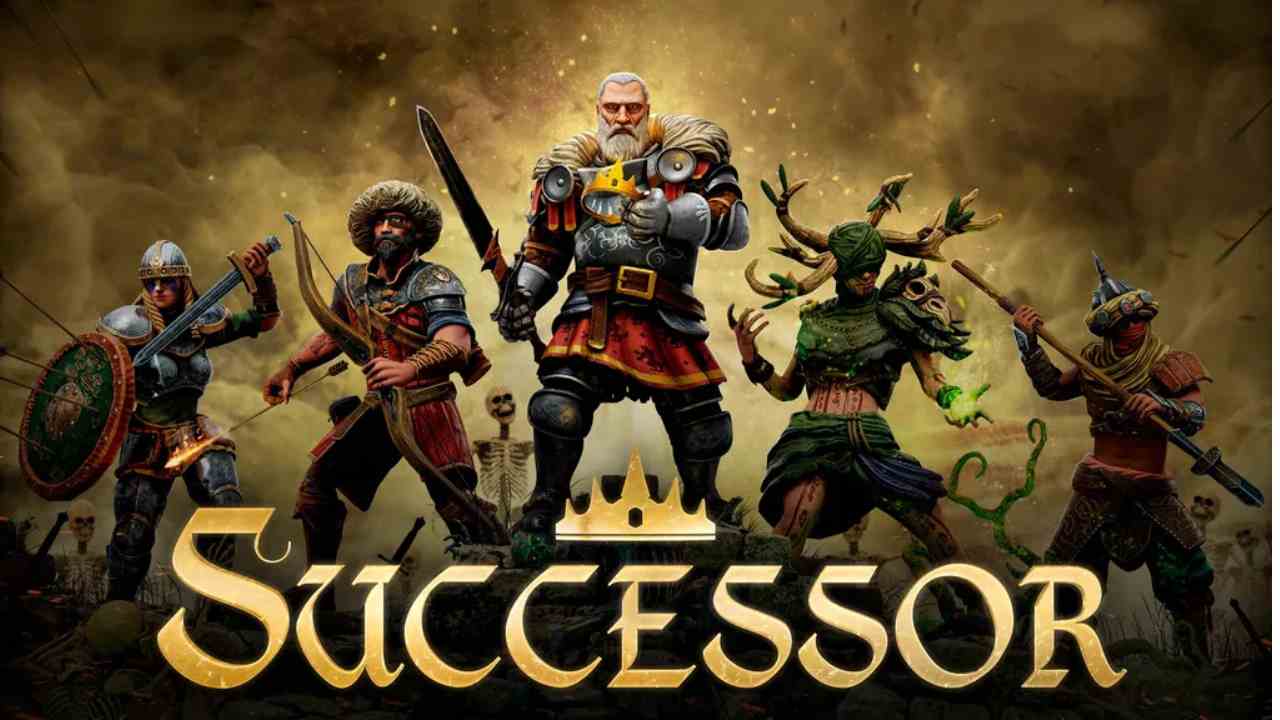
Successor, a tactical roguelite RPG originally released in flat-screen form, has made its VR debut on the Meta Quest platform. It retains its miniature, board-game aesthetic, but now the battlefield can feel like it exists around you rather than just on a flat display. The move to VR comes with mixed reality support, adding some interesting layers—but also some trade-offs.
Below I break down how the game plays in VR, what changes compared to its earlier version, and where the experience seems strongest (and weakest).
Gameplay Adaptation and Core Mechanics
In the Quest version, Successor keeps its real-time combat with a pause option, letting players issue commands, zoom in, inspect the board, then zoom out for tactical overview. It’s still about choosing a lord, recruiting heroes, taking on procedurally generated campaigns, capturing towers, summoning beasts, and using elevation and positioning to gain advantage.
One noteworthy addition in the VR release is mixed reality support. That means you can see the real environment around you overlaid with the diorama battlefield, which helps with immersion and makes maneuvering feel more spatial. It adds a tactile sense to moving pieces, though sometimes scale or clarity issues creep in.
The unlock systems carry over: completing campaigns and defeating rulers adds new heroes, loot, and regions. There are also difficulty modifiers so you can tweak how punishing runs are. For those who liked the flat version’s roguelite structure, that familiarity helps the VR version feel more an evolution than a redo.
Visual Style, Controls, and Comfort
Visually, the game still leans hard into its diorama / miniature aesthetic. Battleboards look like handcrafted sets with small figurines. In VR, that style has both upsides and downsides: the charm of detail is more apparent up close, but resolution and texture issues are more obvious once you get close to the figures or terrain.
Controls are tuned for Quest: you can play standing, seated, or roomscale. Tracking and controller feedback are serviceable, though some players note that finer visual elements (e.g. textures, lighting effects) suffer in comparison to the flatscreen or non-VR versions. Also there’s no PC VR version ready yet; it’s expected but seems delayed relative to Quest.
Comfort is mixed. Mixed reality can help reduce motion sickness because you can anchor yourself using real world cues. But the game is still a tactical RPG, meaning some sessions require long attention spans. Eye strain from close-up detail or small text sometimes surfaces. The pause mechanic helps mitigate that, since you can step back both in view and pace.
What the Switch to VR Means Compared to Other Platforms
One immediate contrast is that many VR strategy or tabletop style games simplify visuals or tactical complexity to avoid overload. Successor tries to retain a lot of depth: multiple heroes with different skills, elevation, positioning, modifiers, etc. That means it leans more toward strategy veterans than casual players.
Another comparison point is how Quest hardware handles such games relative to PC or higher fidelity platforms. Because Quest must balance performance, some graphical compromises are visible—textures less sharp, fewer shader effects, simpler lighting. For people who have played the flat-screen version, the trade-offs will be obvious.
The procedural content and campaign generation is a strength carried over. In VR context, the freshness this offers helps reduce repetition or fatigue. But procedural generation already carries risks of uneven pacing or scaling issues; those risks persist even more in VR where immersion raises expectations.

Virtual Reality Explorer & Game Reviewer
Always the first to plug in. VRSCOUT dives head-first into the most immersive VR worlds, analyzing mechanics, comfort, innovation, and that elusive “presence” factor. If he says it’s worth it, it probably is.