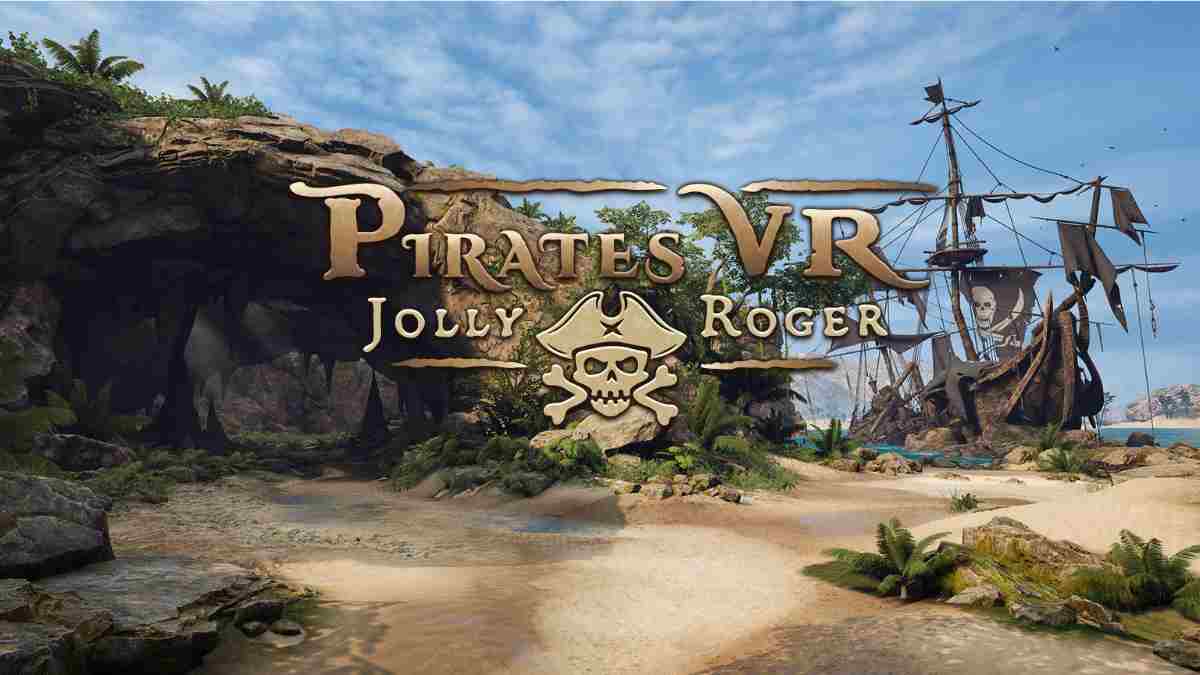
A pirate-themed VR title originally built for Quest is now setting sail for PlayStation’s headset. Pirates VR: Jolly Roger, which first launched on Meta platforms last year, is making its PSVR 2 debut on June 27.
This is a smaller-scale game by design, leaning more into arcade simplicity than deep simulation. Instead of a massive open-world or sprawling progression tree, it focuses on quick sessions, stylized combat, and accessible pirate-themed action.
Gameplay Is Built Around Short-Form Missions
Pirates VR: Jolly Roger centers on fast-paced naval encounters and close-range sword fighting. You’ll steer your ship, fire cannons, and board enemy vessels using motion controls. It’s not trying to be a VR Sea of Thieves — it strips things down to make ship combat feel immediate and tactile.
Missions are short, often dropping players into single-objective skirmishes. These range from basic ship-on-ship firefights to boarding sequences where you clash swords in first-person. Combat mechanics are simplified, but responsive, and built to work well even if you’re not the type to memorize complex button inputs. The design works best in bite-sized bursts. It’s not built for extended campaigns or deep roleplay, but it delivers what it promises: lighthearted pirate action that fits cleanly into VR sessions under an hour.
PSVR 2 Version Adds Visual and Haptic Tweaks
While the original version ran on Quest, the PSVR 2 release adds several hardware-specific upgrades. Haptics in the Sense controllers simulate cannon recoil and sword clashes. Adaptive triggers provide some tactile feedback, although the impact varies depending on the weapon or action. Visually, the game sticks to a stylized aesthetic with exaggerated environments and bright lighting. It won’t impress on a technical level, but it makes smart use of contrast and animation to keep things readable in VR.
On PSVR 2’s OLED display, the colors pop a bit more than they did on Quest, but the core assets remain the same.
Loading times and frame pacing also see a minor improvement, thanks to the PS5’s hardware. That said, the game isn’t pushing the headset’s limits. It’s still a port of a lightweight VR title with a casual target audience.
Limited But Functional Co-op Support
There’s a basic multiplayer option for two players, letting you and a friend take on missions together. There’s no open matchmaking and no ship-to-ship PvP. Co-op works more like a shared session than a full multiplayer mode, and it’s clearly designed for private sessions rather than online competition.
There are also AI companions for those playing solo. These bots handle basic ship functions or cover flanks during sword fights. They’re not particularly smart, but they help keep the pacing up when you’re not playing with a second human. Multiplayer here is more about novelty than depth. It’s a feature that adds variety but doesn’t meaningfully change the loop.
Part of a Broader Trend Toward Arcade VR
Pirates VR: Jolly Roger fits a growing subset of VR titles that don’t aim for realism or complex progression. Like Swarm, Synth Riders, or Pistol Whip, it leans into stylized, tightly-scoped gameplay that works well in short bursts and avoids overwhelming the player.
It also reflects a shift on PSVR 2 toward bringing in content from other headsets, rather than relying on exclusive flagship titles. While this broadens the library, it also signals a more utility-driven approach: fill gaps with known quantities rather than chase tentpole releases.
For players looking for a low-pressure pirate experience in VR, Jolly Roger offers a focused, if limited, take on the genre. It’s more about motion-driven fun than narrative or exploration, and on PSVR 2, it gets just enough of a visual boost to feel at home on the platform.

Virtual Reality Explorer & Game Reviewer
Always the first to plug in. VRSCOUT dives head-first into the most immersive VR worlds, analyzing mechanics, comfort, innovation, and that elusive “presence” factor. If he says it’s worth it, it probably is.