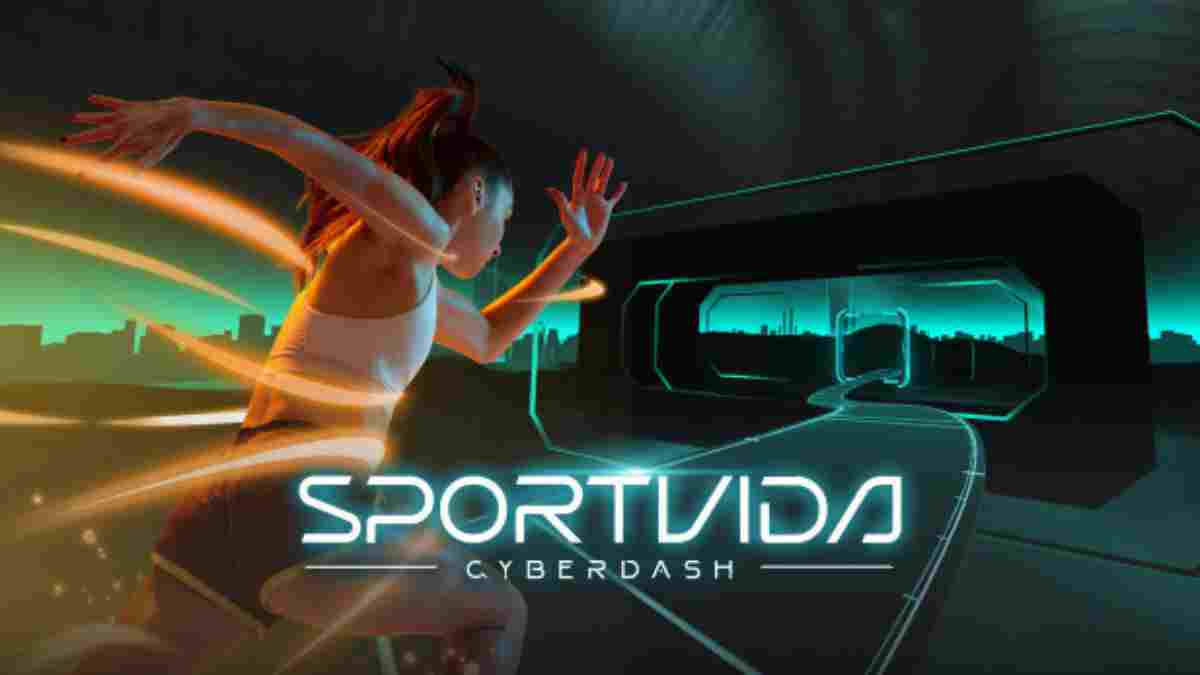
First-person parkour is a familiar idea in flat-screen gaming, but in VR, it’s still relatively unexplored territory. Cyberdash, a new title from developer SportVida, is testing the waters with a high-mobility experience that leans into speed, momentum, and physical movement — all within a stylized futuristic environment.
The game just dropped a free demo on Steam, giving players a hands-on look at its traversal mechanics. It doesn’t shy away from motion, which makes it stand out in a VR space that often plays things safer to avoid discomfort. If you’re looking for a VR title that wants you moving — a lot — this one fits the bill.
Fast Movement in a VR Framework
Cyberdash centers around a momentum-based platformer, similar in concept to games like Mirror’s Edge or Ghostrunner, but adapted for full-body VR. Instead of just using analog sticks, the player physically swings their arms and shifts their body to run, jump, and wall-run through sleek, angular levels.
Movement is tracked with Meta Quest headsets via SteamVR, with mechanics tuned to reward rhythm and flow. Success depends on chaining moves cleanly and reading the level’s layout on the fly. It’s less about combat and more about how well you can control motion at high speed, which makes it a niche but focused kind of experience.
Designed Around Score and Speed
Rather than open exploration or narrative progression, the current demo emphasizes short, self-contained runs. Each level is designed to be replayed and optimized, with scoring based on time, efficiency, and collecting items. It feels closer to arcade-style gameplay than traditional campaign structure.
That design encourages mastery. The more you play a level, the more fluent your movement becomes. There’s an almost rhythm-game element to it — not in music, but in how patterns of motion create smoother runs. It’s clear the game is built for players who enjoy pushing for personal bests and leaderboard climbs.
Visual Style and Technical Focus
Visually, Cyberdash keeps things clean and abstract. Environments are filled with bold colors, geometric surfaces, and minimal textures. That helps readability, especially when flying through at speed, and likely eases performance loads on standalone VR devices.
The design isn’t about realism. It leans into its synthetic aesthetic, which suits the game’s mechanics and keeps focus where it matters: on movement and obstacle timing. The trade-off is a lack of environmental detail or narrative hooks, but that’s clearly not the point here.
Still in Development, but Direction Is Clear
The Steam demo is just a slice of what Cyberdash may eventually become, but it gives a clear picture of what the developers are aiming for. This is a game built around movement — not combat, not story, not simulation. In a VR market where motion mechanics often get toned down or overcomplicated, Cyberdash is opting for a focused, physical approach. It’s demanding by design, and that’s part of the appeal for players who want something that pushes their reflexes and coordination.
Whether it develops into a broader game or stays tightly scoped around speedrunning remains to be seen, but it’s one of the few VR games actively exploring what fast traversal can feel like when you’re physically driving it.

Virtual Reality Explorer & Game Reviewer
Always the first to plug in. VRSCOUT dives head-first into the most immersive VR worlds, analyzing mechanics, comfort, innovation, and that elusive “presence” factor. If he says it’s worth it, it probably is.