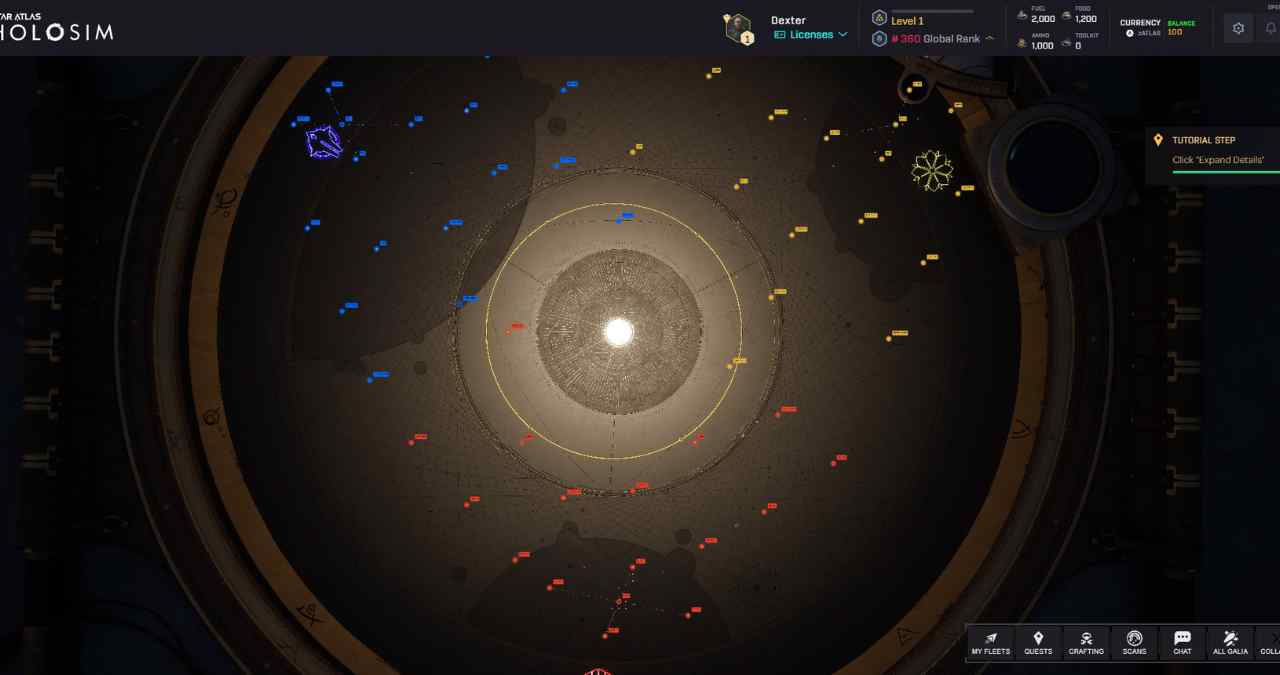
Holosim is stepping out of stealth and into structured competition with the launch of its first official season. What started as a Web3 experiment in real-time tactics and AI-based agent control now introduces a more formal progression system and a $35,000 prize pool to drive player engagement.
Season One builds on the game’s early prototype missions, locking in a clearer format, PvP ladder, and incentive-based structure designed to test skill, not just wallet size.
Gameplay Focuses on Tactical Agent Control
At its core, Holosim isn’t a traditional third-person shooter or turn-based strategy game. Instead, it revolves around training and commanding AI-powered agents in high-stakes simulations. Players issue commands, tweak behavior models, and optimize how their team of agents executes within dynamic combat scenarios.
Unlike twitchy arena games, Holosim rewards foresight, pattern recognition, and understanding how AI routines can adapt mid-battle. Each match runs like a simulation with multiple layers of optimization a bit closer to programming a squad than controlling one directly.
This approach sets it apart from most Web3 games that still lean heavily on idle mechanics or reflex-driven loops. Holosim wants players thinking, iterating, and refining their approach over time.
The Season Structure and Leaderboard Dynamics
With Season One now live, players enter a recurring competition cycle. Each match contributes to their leaderboard ranking, and top players at the end of the season split the $35,000 reward pool. This includes both stablecoin payouts and in-game token rewards tied to Holosim’s ecosystem.
The structure introduces some weight to each match, especially since rankings are determined not just by win-loss records but by in-depth performance metrics. Players are scored based on how efficiently their AI agents complete missions, factoring in time, resource usage, and adaptability.
This kind of system appeals to players who enjoy mastering systems and earning based on precision and learning, rather than just time commitment.
Web3 Integration and Future Expansion
Holosim’s Web3 layer remains fairly light for now. Blockchain use is primarily centered around ownership of agents, cosmetics, and seasonal rewards. The tokenomics aren’t front-and-center in the gameplay, which may work in its favor for a broader player base.
That said, the development roadmap includes plans for expanding both on-chain functionality and off-chain content depth. More agent types, map variations, and AI logic complexity are on the horizon, suggesting that Season One is more of a groundwork phase than a full reveal.
If Holosim can maintain competitive integrity while scaling up, it may carve out a niche within a Web3 landscape that often leans casual or passive. The mix of real strategic depth and tokenized incentives makes it worth watching, even if it’s still early days.

Web3 Analyst & Play Blockchain Games Guide
CryptoKit breaks down Web3 gaming like it’s second nature. From tokenomics to airdrop strategies, she turns blockchain chaos into clear, actionable advice for players who want to win more than XP.