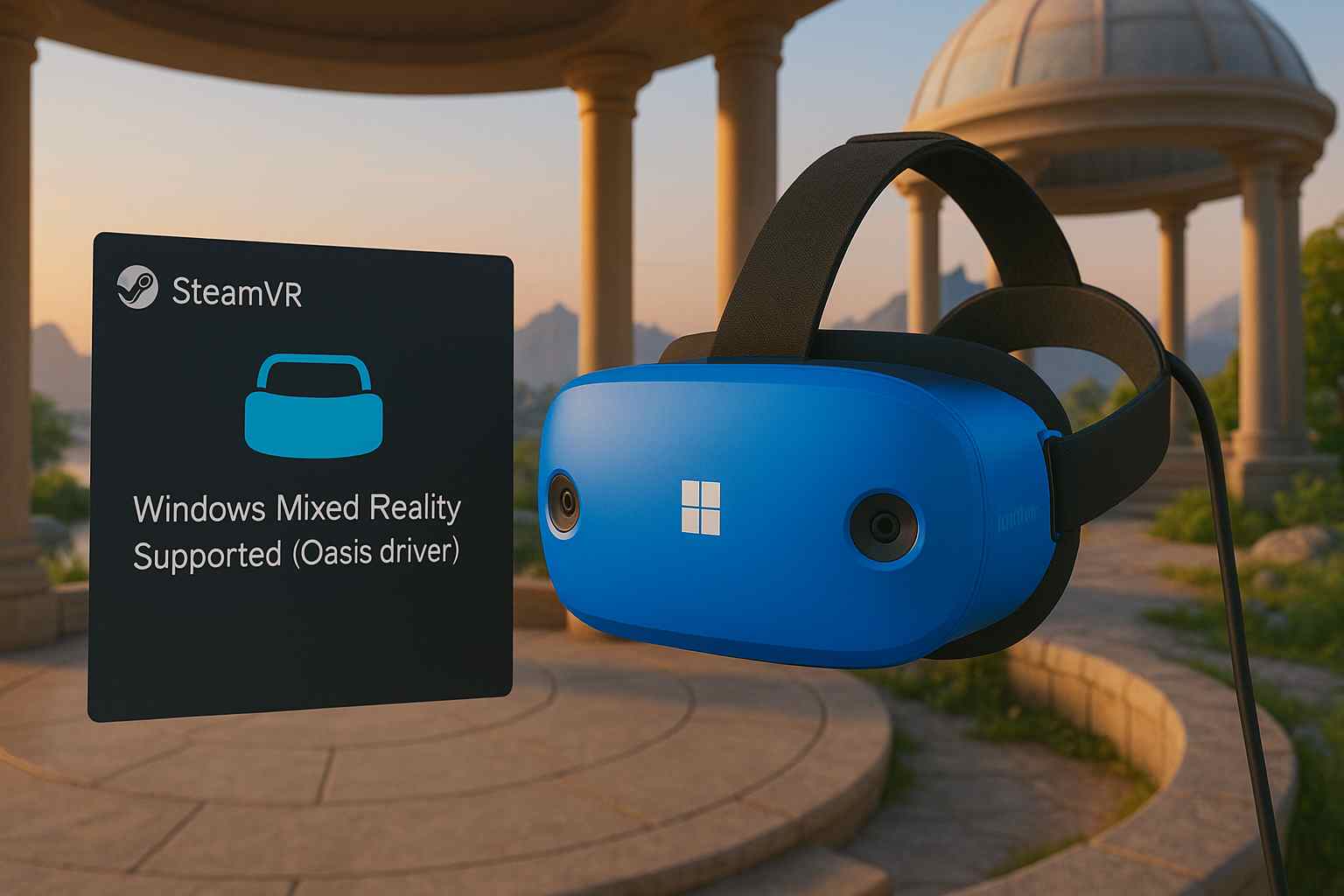
Windows Mixed Reality headsets have been in a strange place since Microsoft officially walked away from the platform. While devices like the HP Reverb G2 still work, native support has been fading, leaving many wondering how long they’d remain usable. Now, a new development in the SteamVR beta points toward extended life for these headsets.
Valve has introduced the Oasis driver into SteamVR’s test branch, effectively restoring and streamlining WMR headset compatibility. It is not a Microsoft fix but a third-party solution integrated directly into SteamVR, showing how community-driven efforts can keep discontinued hardware relevant.
Oasis acts as a replacement bridge between SteamVR and Windows Mixed Reality devices. Previously, players had to run Microsoft’s own WMR portal software in the background, which was clunky and increasingly unstable. With Oasis built directly into SteamVR, the dependency on Microsoft’s abandoned tools is removed.
This means headsets like the Reverb G2 can now connect more directly, cutting down on crashes and reducing the risk of being left behind as Windows updates move on. It is not a reinvention of WMR but a compatibility layer designed to simplify the process for users who still own the hardware.
Why this matters for VR users
The timing is notable. With Microsoft officially out, many assumed WMR headsets were effectively at the end of their lifespan. Oasis gives them a second wind, at least within the SteamVR ecosystem. For anyone who invested in these devices, especially sim players who favored the Reverb G2’s resolution, this is a practical extension of usability.
It also highlights a broader trend in VR: communities and third parties stepping in where manufacturers step away. Similar efforts have kept older Oculus hardware alive long after Meta dropped support, and Oasis falls squarely into that pattern. The difference here is Valve’s willingness to fold it into the SteamVR beta itself rather than leaving it as an external mod.
The bigger picture for VR hardware
VR remains a fragmented space where headsets can disappear quickly once corporate strategies shift. Windows Mixed Reality was an ambitious but inconsistent push, and Microsoft’s retreat left users in limbo. Valve incorporating Oasis signals that at least some level of cross-hardware preservation is possible.
This does not mean WMR is back as a platform. There will be no new headsets, no new features, and no official backing from Microsoft. What it does mean is that existing hardware is not instantly obsolete, and SteamVR remains the glue holding together an otherwise fractured landscape.

Virtual Reality Explorer & Game Reviewer
Always the first to plug in. VRSCOUT dives head-first into the most immersive VR worlds, analyzing mechanics, comfort, innovation, and that elusive “presence” factor. If he says it’s worth it, it probably is.