The World War Z franchise has always leaned on one defining image: walls of sprinting zombies overwhelming anything in their path. Translating that into VR is a tall order, since the spectacle of thousands of bodies crashing together doesn’t map easily to current hardware. The new VR version approaches it differently, narrowing its scope to smaller cooperative missions while keeping the panic intact.
Rather than aiming to replicate the full console experience, World War Z VR positions itself as a more focused spinoff. It still carries the familiar rhythm of surviving waves, scavenging, and pushing through objectives, but scaled to fit comfortably within shorter VR sessions.
Gameplay Approach
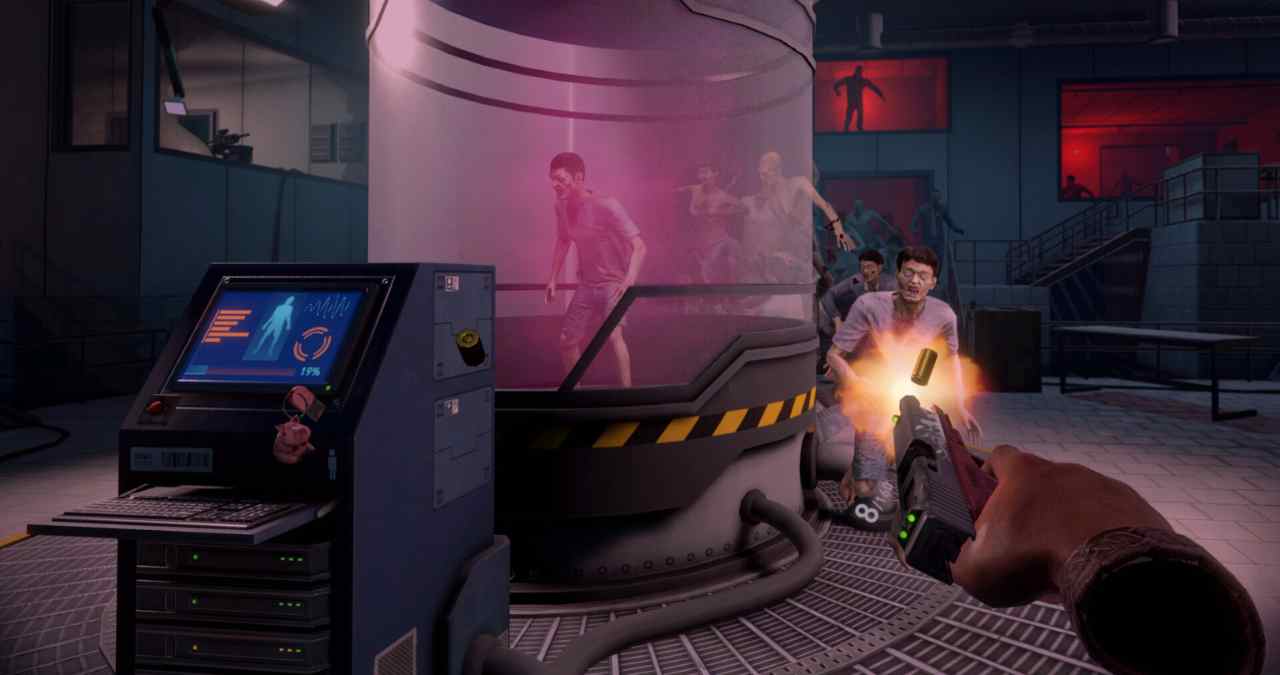
The VR version emphasizes mission-based structure. Players team up, drop into compact scenarios, and push through a mix of shooting, defending, and objective clearing. The maps are smaller than the flat-screen game’s sprawling levels, but that works in VR’s favor, where tight spaces amplify tension.
Combat feels closer to a traditional VR wave shooter than a massive horde simulator, though the designers still try to capture the chaos of swarms. Zombies rush quickly, and keeping track of them in 360 degrees creates its own version of pressure.
Visual Style and Technical Trade-Offs
Visually, the game pares back from the scale of its console counterpart. Instead of rendering hundreds of zombies at once, it opts for smaller groups that still arrive fast enough to keep players scrambling. This trade-off keeps performance stable while still delivering moments of panic.
The environments hold onto the grim, post-apocalyptic tone, but detail is clearly optimized for VR headsets rather than high-end displays. The focus is less about spectacle and more about clarity, ensuring players can track enemies and objectives without clutter.
Co-op Structure and Replayability
Like the mainline game, VR play shines most in co-op. Missions are designed for teamwork, whether holding choke points, distributing ammo, or covering flanks. Solo play is possible but doesn’t capture the same energy, which mirrors the original’s focus on multiplayer.
Replayability comes from mission variety and difficulty scaling rather than large campaigns. It’s a more modular experience, built to slot into shorter play sessions rather than multi-hour grinds.
How It Fits the Series
World War Z VR doesn’t replace the larger franchise entries, but it does extend them into new territory. By adjusting scale and leaning on VR’s immersive tension, it finds its own niche within the brand. Players won’t see the same overwhelming oceans of undead, but the tighter, up-close encounters deliver a different kind of intensity.
It highlights how adaptations into VR often demand rethinking scale. Rather than chase spectacle, the game narrows its focus to make the chaos manageable in a headset, while still carrying the DNA of the original.

Virtual Reality Explorer & Game Reviewer
Always the first to plug in. VRSCOUT dives head-first into the most immersive VR worlds, analyzing mechanics, comfort, innovation, and that elusive “presence” factor. If he says it’s worth it, it probably is.